12 HIPAA Compliance Software Solutions to Know in 2026

What Is HIPAA Compliance Software?
HIPAA compliance software provides a framework for healthcare organizations and their business associates to achieve and maintain adherence to the Health Insurance Portability and Accountability Act (HIPAA) regulations. These solutions help manage the complex tasks of protecting electronic protected health information (ePHI), automating evidence collection, and preparing for audits.
Effective HIPAA compliance software typically includes the following features:
- Comprehensive risk assessments: Tools for conducting detailed security risk analyses to identify gaps in safeguards, often using guided questionnaires and automated assessments.
- Policy and procedure management: Pre-built, customizable templates for creating and managing required HIPAA policies and procedures (Privacy, Security, and Breach Notification Rules).
- Automated evidence collection: Integration with existing systems (like AWS, Azure, Google Drive, HR platforms) to automatically collect and document evidence of compliance efforts, reducing manual work.
- Continuous monitoring: Real-time monitoring of security controls and IT systems to promptly detect vulnerabilities or non-compliance issues.
- Employee training and tracking: Modules to assign, track, and certify employee completion of mandatory HIPAA security and privacy awareness training.
- Business associate agreement (BAA) management: Features to manage and track contracts and BAAs with vendors and third parties who handle PHI.
- Incident management: Tools for documenting, tracking, and reporting data breaches or security incidents in compliance with breach notification rules.
- Audit support and reporting: Centralized documentation and audit-ready reports to simplify the process of responding to audits or investigations by regulatory bodies.
Achieve HIPAA Compliance on Unmanaged Laptops
Learn how to keep sensitive data secure and HIPAA compliant when contractors and remote workers use personal laptops.

In this article:
Benefits of HIPAA Compliance Tools
Using HIPAA compliance software offers several operational and regulatory advantages for healthcare organizations and their partners:
- Centralized compliance management: All compliance tasks such as risk assessments, policy documentation, and employee training are managed from a single platform, making it easier to maintain oversight and ensure consistency.
- Automated risk assessments: Built-in tools guide organizations through security risk assessments, automatically identifying gaps in compliance and suggesting mitigation strategies based on HIPAA standards.
- Real-time audit readiness: Documentation and activity logs are continuously updated and stored in a structured format, making it easier to produce required evidence during HIPAA audits or investigations.
- Ongoing policy and training updates: Software platforms often include regularly updated templates and training modules to ensure that staff stay informed about the latest HIPAA changes and organizational policies.
- Reduced administrative overhead: Automating repetitive compliance tasks, such as sending reminders for training or tracking risk mitigation progress, frees up resources for higher-priority work.
- Improved incident response: Some tools include built-in breach response workflows, helping teams quickly assess, document, and report security incidents in line with HIPAA breach notification rules.
- Enhanced visibility and reporting: Dashboards and reporting features provide insights into compliance status, overdue tasks, and unresolved risks, allowing leadership to make informed decisions.
Key Features of HIPAA Compliance Software
Comprehensive Risk Assessments
Modern HIPAA compliance software performs thorough risk assessments by examining the organization’s systems, processes, and controls. These tools help identify areas of vulnerability, such as outdated software or weak access controls that could expose PHI. Automated assessments simplify the process of mapping threats and vulnerabilities while providing risk ratings, prioritized remediation steps, and supporting documentation.
Regular risk assessments are vital for compliance because HIPAA requires organizations to formalize their understanding of potential threats. Software platforms may schedule assessments at defined intervals, generate executive-level summaries, and retain a historical log of risk management activities.
Policy and Procedure Management
Policy and procedure management is a core feature in HIPAA compliance software, providing a centralized repository for all compliance-related documentation. These platforms enable organizations to create, update, and distribute policies according to regulatory requirements and internal workflows. By managing version histories and acknowledging policy reviews, the software helps maintain up-to-date practices across all departments.
In addition, automated notification and attestation workflows ensure employees are made aware of new or updated policies. Traceable digital records reinforce accountability, demonstrating that policies are not only written but actively communicated and followed.
Automated Evidence Collection
Automated evidence collection relieves much of the administrative headache of gathering proof for compliance activities. HIPAA compliance software can automatically record user access logs, policy attestations, training completions, and corrective actions as they occur. These records create a comprehensive audit trail, reducing the scramble to find documentation when responding to investigations or audits.
Effective automated evidence collection also improves data integrity. These platforms can flag missing or outdated records, prompt responsible staff to address gaps, and store documentation in secure, easy-to-access formats. This continuous approach to evidence gathering helps meet record retention requirements.
Continuous Monitoring
Continuous monitoring is a crucial feature ensuring compliance doesn’t degrade over time. These tools monitor technical and administrative controls for abnormalities, unauthorized access, or other compliance deviations. Real-time alerts and dashboards keep IT and compliance staff informed about issues as soon as they arise, allowing immediate investigation and remediation.
Beyond threat detection, continuous monitoring allows organizations to demonstrate ongoing diligence required by HIPAA’s Security Rule. Some platforms provide detailed logs, trend analysis, and automated incident correlation to help organizations not only detect but also anticipate future risks.
Employee Training and Tracking
HIPAA requires ongoing training for employees, and compliance software typically offers integrated training modules along with tracking and reporting capabilities. These modules ensure staff understand HIPAA rules and their individual responsibilities for handling PHI. Training programs are often customizable, include scenario-based learning, and feature built-in assessments to reinforce retention.
Tracking employee participation and completion rates ensures no one falls through the cracks and keeps organizations in step with HIPAA’s documentation mandates. The software generates detailed training records, stores certificates of completion, and issues reminders for retraining intervals.
Business Associate Agreement (BAA) Management
Managing Business Associate Agreements (BAAs) is essential for organizations that rely on third parties to process PHI. HIPAA compliance software automates the creation, storage, and monitoring of BAAs, reducing the risk of expired or incomplete agreements. The system provides templates, tracks the status of each BAA, and notifies when renewals or updates are needed.
In addition to version control, BAA management modules maintain a centralized record of all business associates, supporting due diligence in vendor management. Automated workflows improve accountability and ensure compliance with HIPAA’s requirement to have agreements in place before sharing PHI.
Incident Management
Incident management features enable organizations to document, track, and respond to suspected HIPAA breaches or violations. These tools guide users through investigation steps, incident classification, and required notifications under the Breach Notification Rule. Software solutions can enforce workflows for timely documentation, root cause analysis, and corrective actions.
Comprehensive incident logs and reporting capabilities aid regulatory response and internal reviews. By centralizing incident management within the compliance platform, organizations can quickly identify trends, measure response times, and improve procedures based on real-world incidents. Fast, organized responses to breaches help limit legal liability and protect patient data.
Audit Support and Reporting
HIPAA compliance software eases the audit process by compiling all necessary documentation and evidence in standardized reports. Audit support tools help organizations prepare for both internal and external audits by mapping compliance activities to regulatory requirements. This ensures there are no last-minute scrambles for records or proof during an investigation.
Automated reporting capabilities enable quick generation of gap analyses, attestation reports, policy adoption logs, and more. These reports can be tailored for regulators, executives, or internal use, showcasing the organization’s commitment to compliance.
Noteworthy HIPAA Compliance Software Providers
BYOD and Secure Workspace Solutions
1. Venn

Deliver secure virtual care without the cost and complexity of VDI. Venn protects patient data on personal and unmanaged laptops used by remote clinicians, contractors, and staff – enabling HIPAA compliance, fast app performance, and full control over PHI.
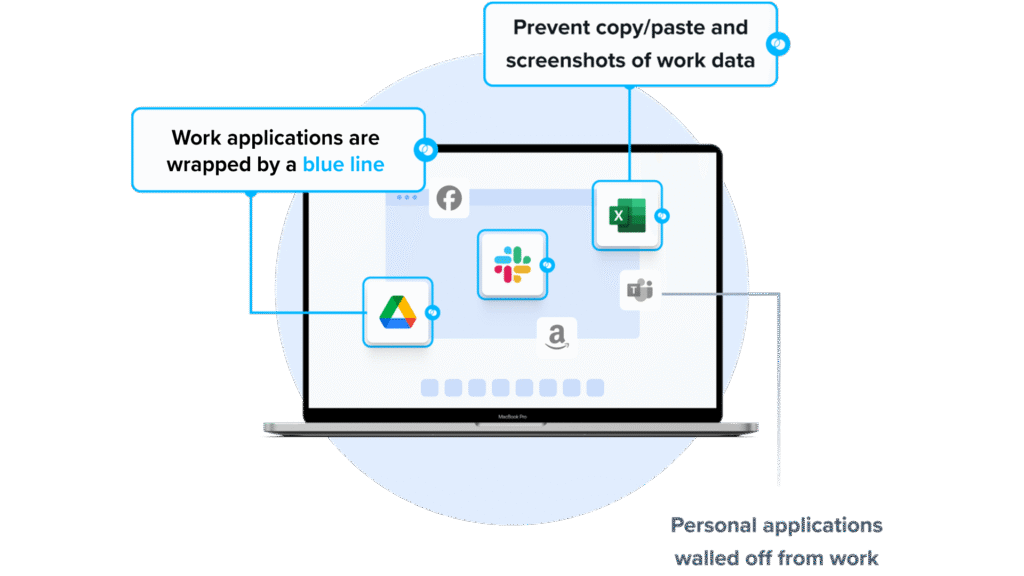
Similar to an MDM solution but for laptops, work lives in a company-controlled Secure Enclave installed on the user’s PC or Mac, where all data is encrypted and access is managed. Work applications run locally within the Enclave – visually indicated by Venn’s Blue Border™ – protecting and isolating business activity while ensuring end-user privacy.
With Venn, you can eliminate the burden of purchasing and securing laptops and managing virtual desktops (VDI.) Unlike virtual desktops, Venn keeps users working locally on natively installed applications without latency – all while extending corporate firewall protection to business activity only.
Key features include:
- Granular, customizable restrictions: IT teams can define restrictions for copy/paste, download, upload, screenshots, watermarks, and DLP per user.
- Secure Enclave technology: Encrypts and isolates work data on personal Mac or PC computers, both for browser-based and local applications.
- Zero trust architecture: Uses a zero trust approach to secure company data, limiting access based on validation of devices and users.
- Visual separation via Blue Border: Visual cue that distinguishes work vs. personal sessions for users.
- Supports turnkey compliance: Using Venn helps companies maintain compliance on unmanaged Macs with a range of regulatory mandates, including HIPAA, PCI, SOC, SEC, FINRA and more.
If you want to see Blue Border in action, book a demo here.
2. Jamf Pro

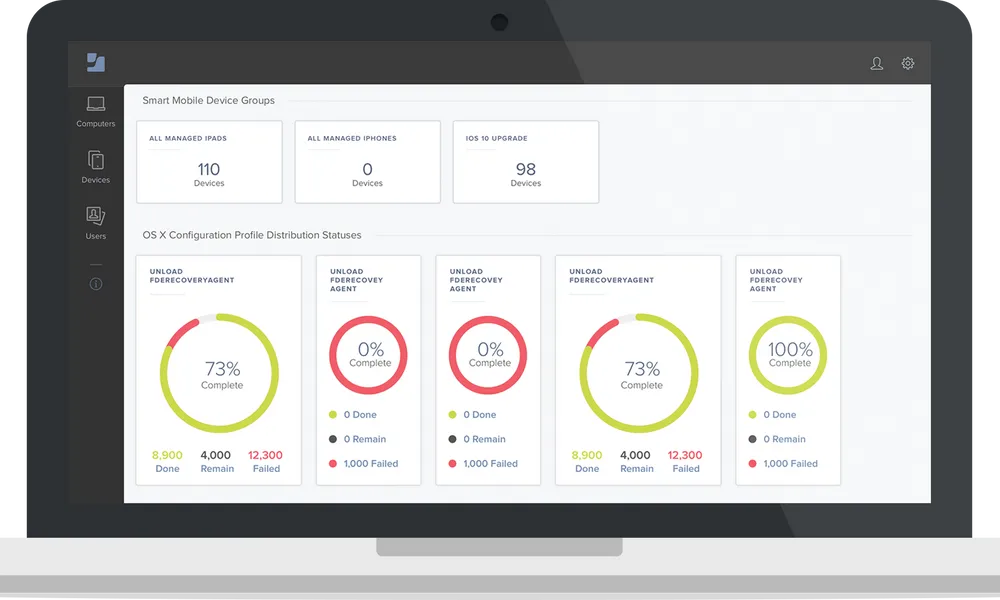
Jamf Pro is an Apple device management and security platform that supports HIPAA compliance in healthcare environments by automating mobile device management (MDM), security enforcement, and reporting across macOS, iOS, iPadOS, and tvOS devices.
Key features include:
- Zero-touch deployment: Automates provisioning of Apple devices, including BYOD, for secure and consistent configuration without user interaction.
- Inventory management: Continuously collects and reports hardware, software, user, and security data from managed devices, supporting compliance visibility.
- Security policy enforcement: Applies compliance baselines, enforces encryption, and uses remote commands to lock, wipe, or restrict devices as needed.
- App lifecycle and self-service management: Automates secure app deployment while allowing users to maintain their own devices via a curated self-service portal.
- ZTNA and identity integration: Supports secure access using Jamf Connect with encrypted ID-based authentication, Zero Trust Network Access, and integration with platforms like Microsoft, Google, and Okta.
Source: Jamf
3. Workspace ONE
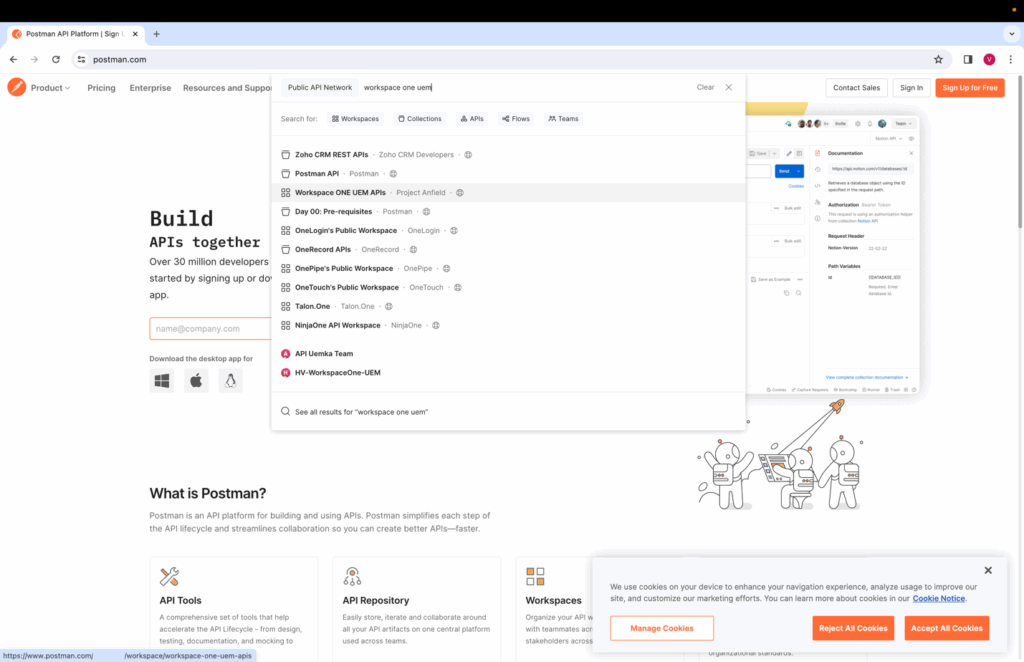
Workspace ONE, from Omnissa, provides a unified endpoint management platform that supports HIPAA compliance and zero trust initiatives across mobile, desktop, and cloud environments. The platform enables secure device enrollment, configuration, monitoring, and policy enforcement while integrating with identity, access, and virtual desktop infrastructure (VDI) systems.
Key features include:
- Unified endpoint management (UEM): Manage all device types, including BYOD, corporate-owned, and shared devices, across multiple platforms from a single interface.
- Zero-touch onboarding and provisioning: Automate device enrollment and policy enforcement, reducing manual IT tasks and ensuring compliant configurations from the start.
- Zero trust security enforcement: Continuously assess device health and user behavior before granting access, and enforce least-privilege access, MFA, and encryption requirements.
- Baseline and compliance management: Apply pre-defined security baselines aligned to frameworks like NIST SP 800-171, with audit-ready documentation.
- Remote support and remediation: Use Workspace ONE Assist and integrated SOC tools to provide secure remote support and initiate incident response actions.
Source: Omnissa
HIPAA Compliance Automation and GRC Software
4. Sprinto

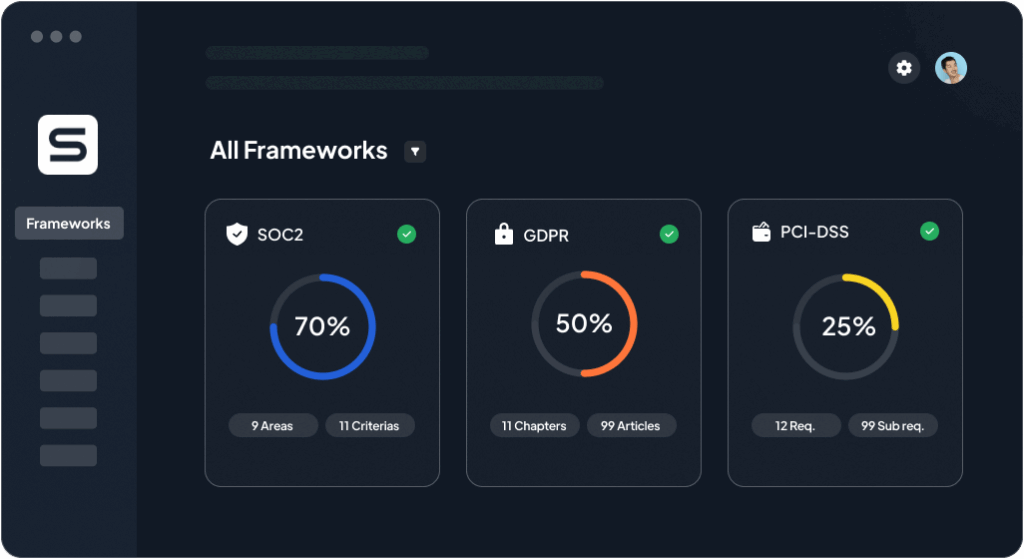
Sprinto offers an integrated platform for HIPAA compliance automation, combining guided implementation, continuous monitoring, and audit preparation into a single system. It helps healthcare organizations enforce required safeguards, manage risk, monitor third-party vendors, and automate documentation of controls and evidence for audits.
Key features include:
- Structured program implementation: Guided setup of HIPAA controls and documentation tailored to organizational needs, avoiding generic checklists.
- Integrated risk assessments: Conducts security and privacy risk assessments with built-in risk registers to identify and track mitigation actions.
- Continuous compliance monitoring: Automatically checks for policy drift, control failures, and system misconfigurations, issuing alerts as needed.
- Automated evidence collection: Captures compliance artifacts and maintains an up-to-date audit trail for faster audit readiness.
- Employee training and access control: Launches HIPAA training programs and enforces access policies through a dedicated module.
Source: Sprinto
5. Scytale

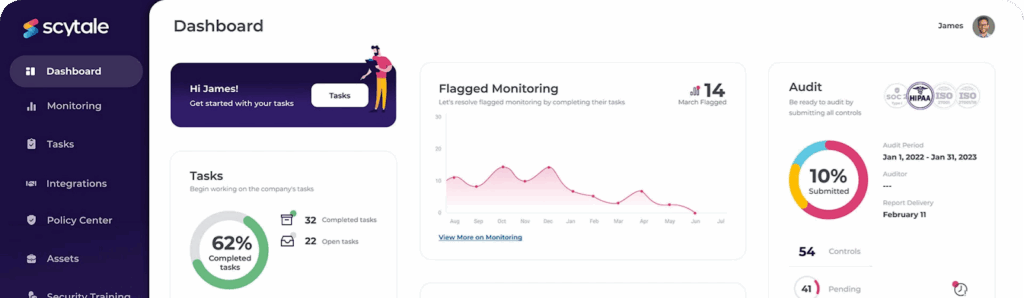
Scytale provides an automated platform for HIPAA compliance that helps healthcare organizations manage privacy and security requirements. The solution supports the compliance lifecycle from risk assessment to audit readiness while offering built-in control monitoring, evidence collection, and employee training.
Key features include:
- HIPAA risk and self-assessments: Conducts structured risk assessments and self-audits to identify areas where PHI may be at risk and demonstrate compliance readiness.
- Automated evidence collection: Gathers proof of implemented security controls automatically, reducing time spent preparing for audits.
- Continuous control monitoring: Tracks the status of controls and alerts teams to compliance failures or misconfigurations.
- Custom policy builder: Offers editable policy templates aligned to HIPAA, allowing teams to tailor documentation to their organization’s needs.
- HIPAA training: Delivers awareness training for employees to ensure proper handling and protection of PHI.
Source: Scytale
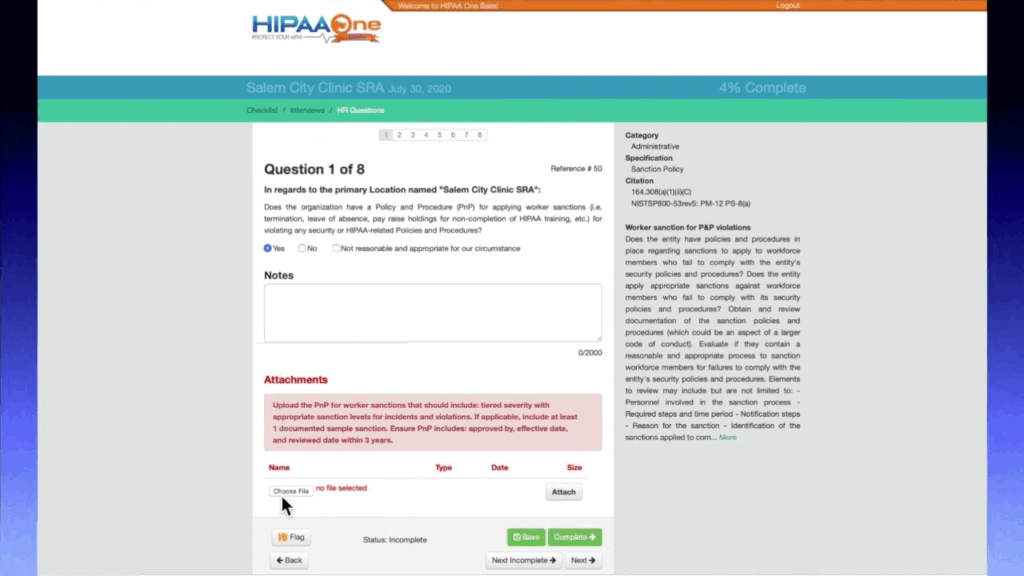
6. HIPAA One
HIPAA One, delivered via the Accountable platform, is a healthcare compliance software solution to simplify and centralize HIPAA compliance management. It supports organizations in meeting HIPAA Privacy and Security Rule requirements through automated risk assessments, employee training, vendor management, and monitoring tools.
Key features include:
- Security risk assessments: Conducts proactive HIPAA Security Rule assessments to identify compliance gaps and prevent breaches.
- Employee training modules: Offers HIPAA training, security awareness, and other compliance courses through an employee portal.
- Policy and document management: Provides centralized control over HIPAA-aligned policies, procedures, and training materials.
- Vendor and contract management: Tracks third-party compliance with integrated BAAs, monitoring, and documentation tools.
- Data breach monitoring and incident response: Continuously monitors for potential data breaches and enables employees to report incidents for fast remediation.
Source: Intaprise Health
7. Accountable

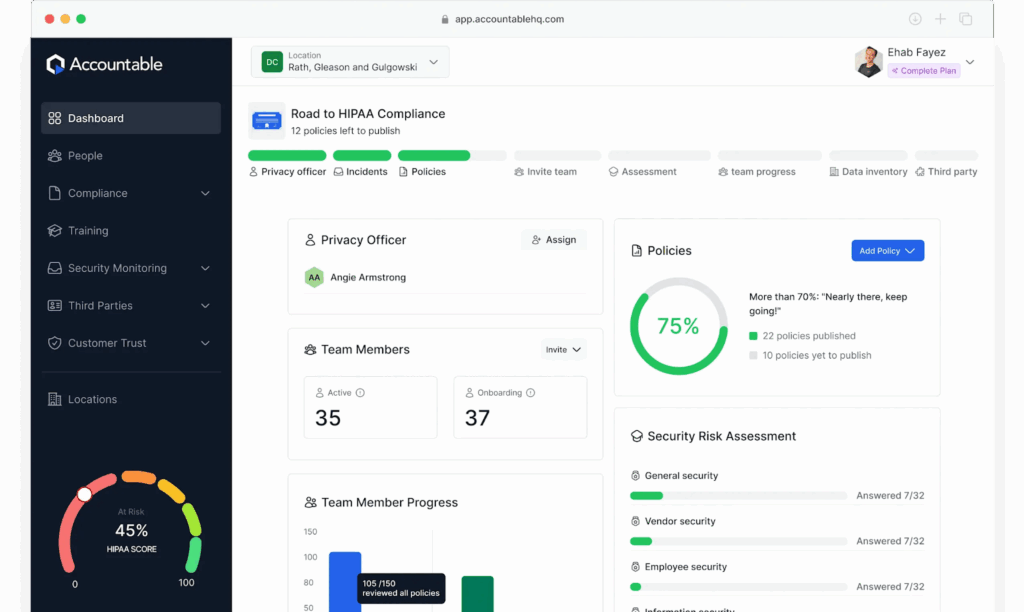
Accountable is a HIPAA compliance software platform to help healthcare providers and related organizations manage privacy, security, and risk in one place. It offers tools for automating policy enforcement, training staff, conducting risk assessments, and managing vendors.
Key features include:
- Security risk assessments: Tools for identifying and addressing vulnerabilities, including proactive audits and compliance gap analysis.
- Employee training and awareness: Includes HIPAA security rule training, security awareness modules, and other compliance-focused education programs.
- Policy and document management: Centralized system for managing compliance policies, procedures, and essential documentation.
- Vendor and contract management: Support for managing vendor compliance, third-party monitoring, and BAA tracking.
- Data breach monitoring: Continuous monitoring to detect potential breaches and notify affected employees.
Source: Accountable
8. HIPAA E-tool

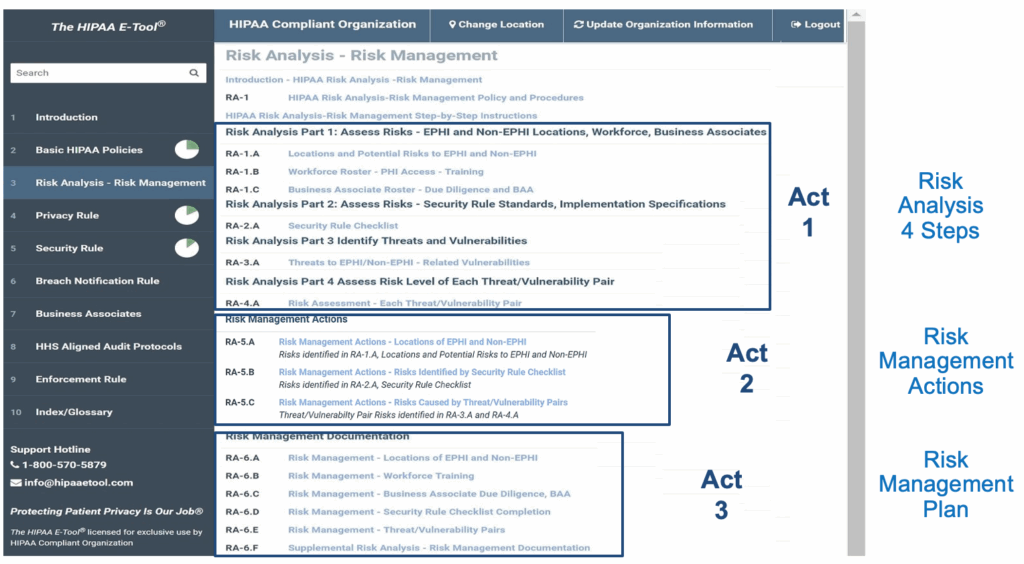
HIPAA E-Tool is a web-based compliance platform to guide organizations step by step through HIPAA Privacy and Security Rule requirements. It offers customizable templates, automated updates, and interactive tools to help covered entities and business associates meet regulatory obligations.
Key features include:
- Web-based access: A fully online solution, accessible with no installation required.
- Customizable policies and forms: Allows users to personalize templates with their organization’s name and contact details.
- Step-by-step compliance guidance: Interactive tools walk users through HIPAA rules with plain-language explanations.
- Searchable compliance library: Provides fast access to HIPAA topics, regulations, and supporting materials.
- Risk analysis and management: Includes tools to conduct self-assessments and document risk mitigation efforts.
Source: HIPAA E-tool
9. EPICompliance

EPICompliance is an online platform to help healthcare organizations manage federal compliance requirements, including HIPAA, OSHA, and ACA/OIG regulations. The solution includes mandatory training, secure document storage, automated compliance tasks, and audit support.
Key features include:
- Integrated compliance training: Online education covering HIPAA Privacy and Security, OSHA, and ACA/OIG requirements, with CME/CE credits.
- Policy and document management: A continuously updated library of federally mandated forms, policies, and documents, stored in a secure cloud platform.
- Automated compliance tasks: Monthly task lists, security checklists, and reminders to ensure timely adherence to regulations.
- Business Associate Agreement center: Tools for managing HIPAA-compliant agreements with business associates and covered entities.
- Risk management support: Includes professional HIPAA risk assessments, incident management coordination, and assistance with remediation planning.
10. Compliancy Group

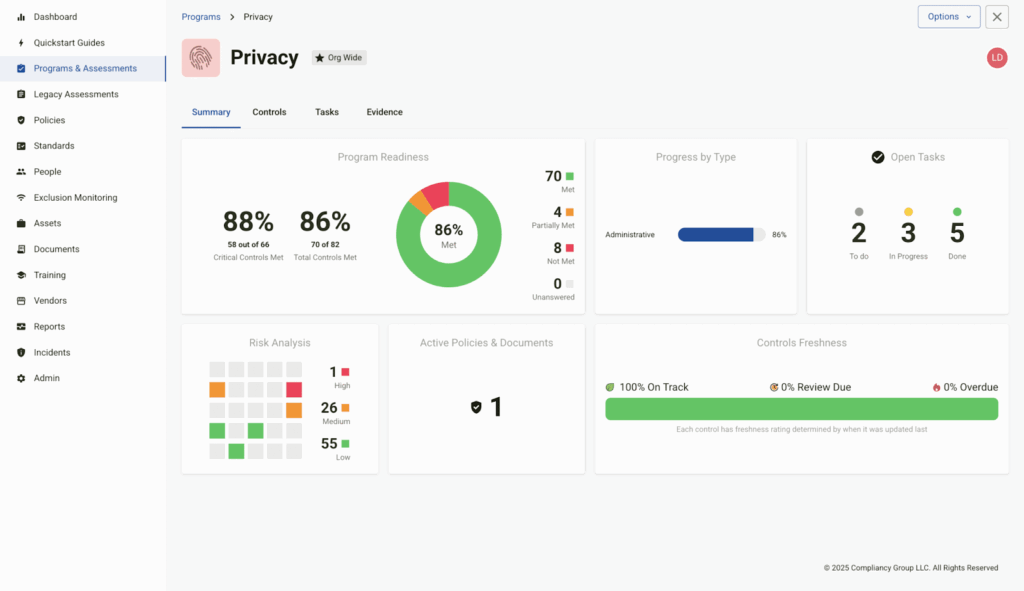
Compliancy Group offers a HIPAA compliance platform to simplify regulatory adherence for healthcare providers and their business associates. The platform includes templated policies, staff training, risk assessments, and incident tracking managed through a centralized compliance dashboard.
Key features include:
- Compliance dashboard: Centralized interface for tracking training progress, assessments, remediation efforts, and vendor status.
- Policies and procedures: Prebuilt, customizable documents aligned with HIPAA requirements to standardize privacy and security practices.
- HIPAA training: Built-in video training with tracking, certificates, and employee attestations to verify participation.
- Risk assessments: Guided workflows to complete six required HIPAA security audits and develop remediation plans.
- Incident management: A ticketing system to report, track, and resolve potential breaches or compliance events.
Source: Compliancy Group
11. HIPAAtrek

HIPAAtrek is a HIPAA compliance management platform that centralizes, organizes, and automates compliance tasks to reduce administrative burden and maintain readiness for audits. Designed by healthcare professionals, it includes tools for training, document management, breach response, and policy updates.
Key features include:
- Centralized compliance management: Access all policies, contracts, forms, and training resources in one platform with version tracking.
- Automated reminders and alerts: Receive notifications for upcoming training, BAA renewals, and policy updates to stay compliant.
- Risk and breach assessments: Tools for conducting and documenting HIPAA risk assessments and managing breach investigations.
- BAA and contract management: Edit, review, and store Business Associate Agreements in a centralized, cloud-based location with version history.
- Audit-ready reporting: Instantly generate reports and dashboards to demonstrate compliance and track outstanding tasks.
12. Paubox

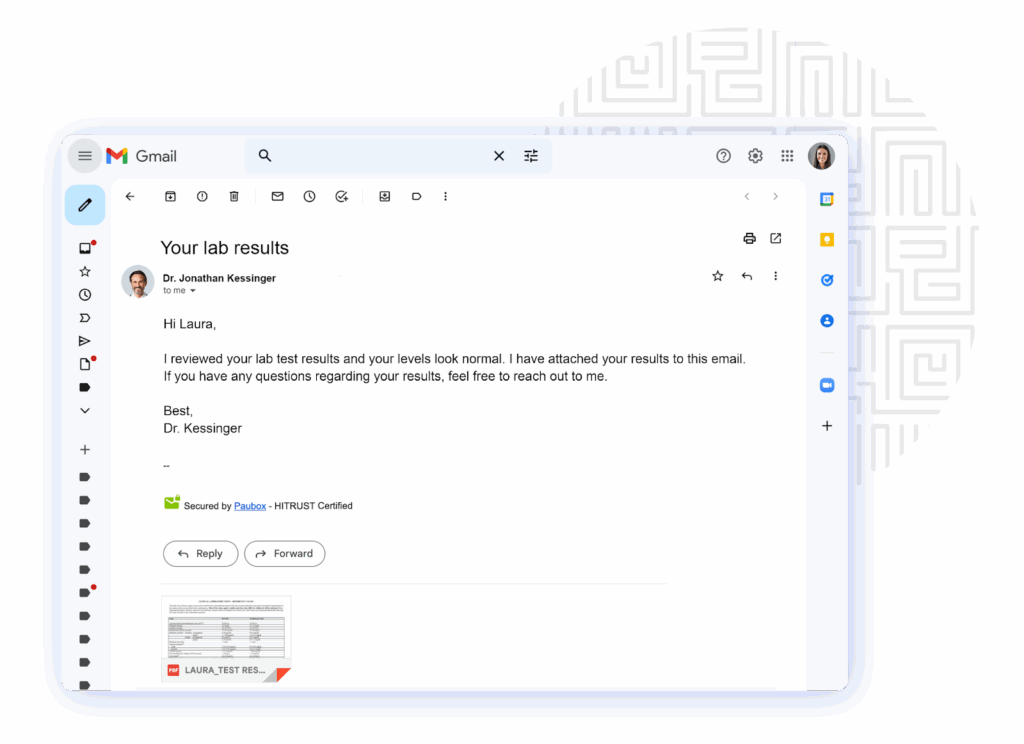
Paubox provides HIPAA-compliant email security specifically for healthcare organizations. Its platform uses generative AI to detect phishing, ransomware, and social engineering threats before they reach users’ inboxes. Paubox integrates with Google and Microsoft email services, ensuring encrypted communication without added complexity for senders or recipients.
Key features include:
- HIPAA-compliant encrypted email: Send secure messages through Google Workspace and Microsoft 365 without requiring portals or extra steps.
- AI-based threat detection: Uses generative AI to analyze tone, behavior, and message intent to stop phishing and impersonation attacks.
- Continuous threat learning: AI adapts over time to new attack patterns, improving detection accuracy.
- Transparent threat insights: Provides human-readable explanations for why emails were flagged, aiding investigation and understanding.
- Secure email marketing: Enables healthcare organizations to send and track HIPAA-compliant marketing campaigns.
Source: Paubox
Conclusion
HIPAA compliance software aids in helping healthcare organizations navigate complex regulatory requirements with greater efficiency and accuracy. By automating risk assessments, training, documentation, and monitoring, these tools reduce human error and administrative burden while strengthening an organization’s ability to safeguard protected health information. They also provide structured workflows that support continuous compliance, not just one-time efforts, ensuring that security and privacy practices evolve alongside regulatory changes and operational demands.