VDI Desktop as a Service: Benefits, Drawbacks, and Alternatives


Organizations have used VDI desktop as a service for years to deliver secure remote access to employees, contractors, and distributed teams. By hosting desktops in the cloud or data center, IT teams can centralize control, reduce local data exposure, and standardize access across many users.
But while VDI desktop as a service has long been a common approach to remote work security, it also comes with tradeoffs. Cost, complexity, latency, and user experience challenges have led many organizations to question whether a hosted desktop is still the best model for modern remote work.
In this guide, we explain what VDI desktop as a service is, how it works, where it fits, and why many organizations are now looking for alternatives.
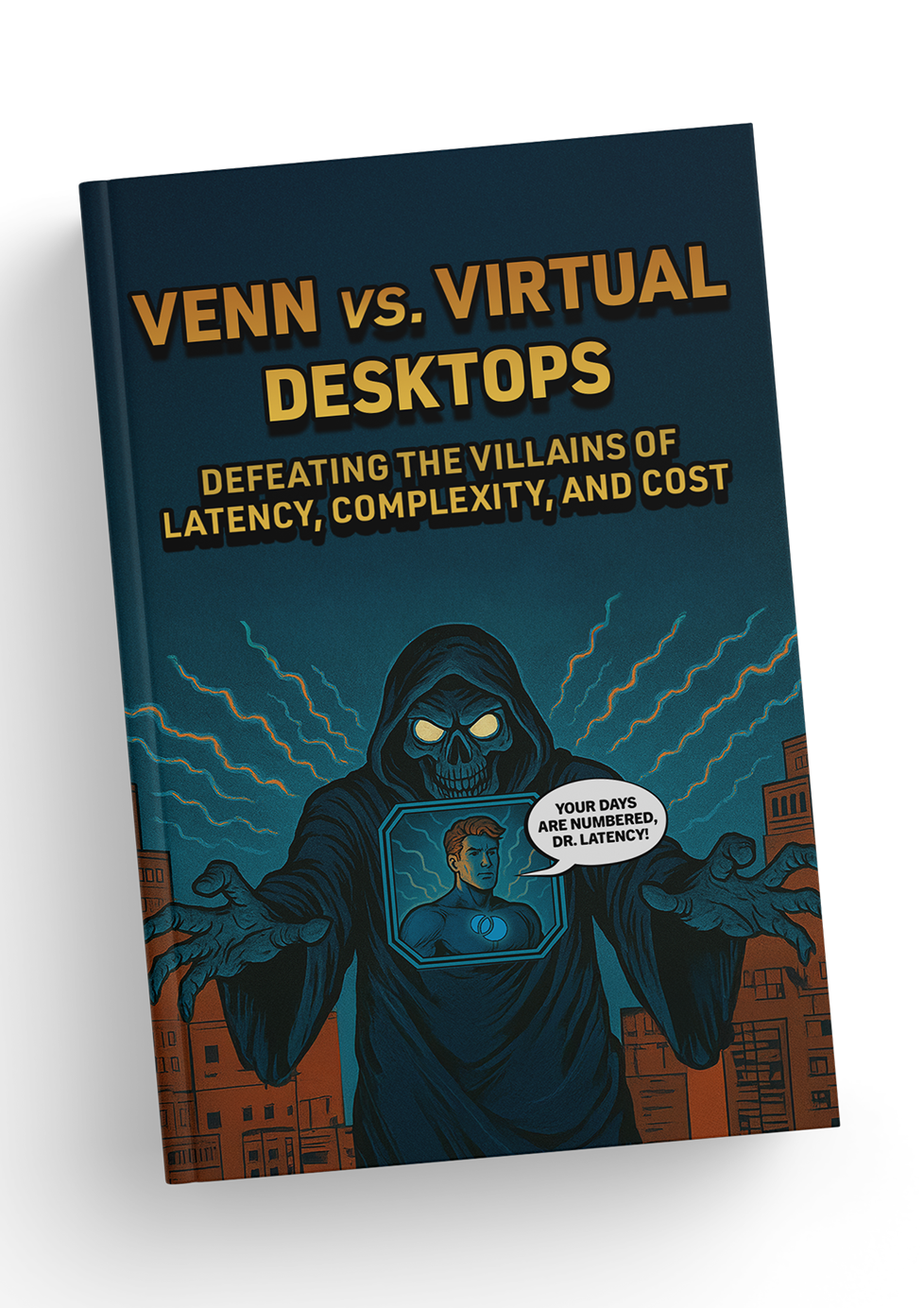
Frustrated by Lag and Latency from VDI/DaaS?
Discover how Venn’s local-first approach secures remote workforces without the complexity and latency of traditional VDI.
In this article:
- What Is VDI Desktop as a Service?
- How VDI Desktop as a Service Works
- Why Organizations Use VDI Desktop as a Service
- Benefits of VDI Desktop as a Service
- Drawbacks of VDI Desktop as a Service
- VDI vs. Desktop as a Service: Is There a Difference?
- When VDI Desktop as a Service Makes Sense
- When Organizations Start Looking for Alternatives
- Alternatives to VDI Desktop as a Service
- VDI Desktop as a Service vs. Blue Border™
- How to Choose Between VDI Desktop as a Service and an Alternative
- Final Thoughts on VDI Desktop as a Service
What Is VDI Desktop as a Service?
VDI desktop as a service is a model in which a user accesses a virtual desktop that is hosted remotely rather than running a full work environment directly on their local device.
The term combines two closely related concepts:
- VDI (Virtual Desktop Infrastructure), where desktops are hosted in a centralized environment
- Desktop as a Service (DaaS), where those desktops are delivered as a cloud service
In many conversations, VDI desktop as a service is used broadly to describe hosted virtual desktops that allow users to work remotely from almost any endpoint.
Instead of relying on the endpoint itself to run the full corporate desktop, the desktop session is streamed from remote infrastructure to the user’s PC, Mac, or thin client.
How VDI Desktop as a Service Works
With VDI desktop as a service, the desktop, applications, and often the data remain in a hosted environment. The user connects to that environment over the internet and interacts with it remotely.
A typical desktop as a service VDI setup includes:
- centralized desktop hosting
- remote access software or streaming protocols
- identity and access controls
- security policies managed by IT
- user sessions delivered to distributed endpoints
This model became popular because it gave organizations a way to support remote work while keeping the core desktop environment under centralized control.
Why Organizations Use VDI Desktop as a Service
There are good reasons why VDI desktop as a service became so widely adopted.
Centralized control
IT teams can manage desktops, applications, patches, and policies from a central environment rather than relying fully on the endpoint.
Reduced local data exposure
Because the desktop is hosted remotely, organizations can limit how much sensitive data lives directly on the user’s local machine.
Consistent desktop delivery
A desktop as a service VDI model can provide a more standardized work environment across many users and device types.
Support for remote and distributed teams
VDI and DaaS have often been used to enable remote employees, offshore teams, contractors, and third parties without requiring every worker to be on a traditional corporate laptop.
Legacy application access
Some organizations still rely on legacy Windows apps or full desktop environments that are easier to deliver through hosted desktops.
Benefits of VDI Desktop as a Service
For the right environment, VDI desktop as a service can offer meaningful advantages.
1. Centralized desktop administration
A hosted desktop model makes it easier to manage user environments from one place.
2. Better control over access
IT and security teams can apply access policies, provisioning workflows, and session controls centrally.
3. Less dependency on endpoint standardization
Since the desktop is delivered remotely, organizations may have more flexibility in the devices users connect from.
4. Easier delivery of full corporate desktops
When users need an entire desktop experience rather than access to a few secure apps, VDI desktop as a service can be a practical option.
Drawbacks of VDI Desktop as a Service
Although the model has benefits, many organizations also discover significant drawbacks once VDI desktop as a service is deployed at scale.
1. Cost
One of the biggest concerns with VDI desktop as a service is cost. Hosted desktops often require substantial investment in infrastructure, licensing, cloud resources, storage, management, and support.
What may begin as a secure access strategy can become a major operational expense.
2. User experience and latency
Because the desktop session is hosted remotely, performance depends on connectivity, latency, and the responsiveness of the hosted environment.
That can lead to:
- lag
- slower application responsiveness
- frustration in everyday workflows
- a less natural user experience than local work
3. Operational complexity
A desktop as a service VDI environment still needs to be provisioned, maintained, monitored, patched, and scaled. For many teams, VDI does not eliminate complexity so much as relocate it.
4. Dependency on internet quality
When the work environment is streamed, the user experience is closely tied to network conditions. That can be a challenge for global workforces or workers in lower-quality network environments.
5. Poor fit for some modern BYOD programs
Many organizations now want to support work on personal laptops without shipping managed devices and without forcing every user into a hosted desktop. In those cases, VDI desktop as a service can feel heavier and more expensive than necessary.
VDI vs. Desktop as a Service: Is There a Difference?
Many people search for VDI desktop as a service and desktop as a service VDI as though they are exactly the same. In practice, they are closely related, but not always identical.
- VDI often refers to the underlying virtual desktop infrastructure
- Desktop as a Service usually refers to a cloud-delivered or provider-managed model for those desktops
That said, from a buyer perspective, both terms usually point to the same broader idea: a hosted desktop delivered remotely to the end user. The difference between VDI and desktop as a service primarily lies in the management of the infrastructure.
When VDI Desktop as a Service Makes Sense
Despite its drawbacks, VDI desktop as a service still makes sense in some environments.
It can be a good fit when:
- the organization needs a fully centralized desktop
- critical legacy applications must remain in a hosted environment
- users require a full Windows desktop rather than access to a few specific apps
- IT wants strong control over the desktop image and session environment
- network conditions are good enough to support the experience
In these use cases, VDI desktop as a service can still be a valid solution.
When Organizations Start Looking for Alternatives
The biggest shift in the market is that many organizations no longer need a full hosted desktop for every remote worker.
Instead, they need a way to:
- securely enable work on personal laptops
- onboard contractors quickly
- support offshore teams
- protect company apps and data
- avoid shipping company-issued hardware
- maintain a strong user experience
- reduce the cost and complexity associated with VDI
That is where many organizations begin searching for alternatives to VDI desktop as a service.
Alternatives to VDI Desktop as a Service
Not every remote work security strategy needs to rely on hosted desktops.
A growing alternative is to secure work locally on the endpoint rather than hosting the entire desktop remotely. In this model, approved work applications run on the local PC or Mac, but remain isolated and controlled through a secure workspace approach. Blue Border™ by Venn is the top alternative.
This can be especially appealing for BYOD and contractor-heavy environments because it allows organizations to protect work without taking on the full infrastructure burden of VDI desktop as a service.
VDI Desktop as a Service vs. Blue Border™
The biggest difference between VDI desktop as a service and Venn Blue Border™ is where work happens.
With VDI desktop as a service, the work environment is hosted remotely and streamed to the user.
With Blue Border™, approved work apps run locally on the user’s PC or Mac inside an IT-controlled secure enclave. Work and personal activity remain isolated and separated, while security controls (ex DLP and exfiltration) stay enforced without relying on hosting, streaming, or virtualization.
Performance
VDI desktop as a service depends on network quality and remote session performance.
Blue Border™ enables local performance because work runs on the endpoint.
Cost
VDI desktop as a service often comes with infrastructure and licensing overhead.
Blue Border™ avoids the need to host full desktops.
User experience
Desktop as a service VDI can introduce lag and friction.
Blue Border™ preserves a more natural local experience.
Fit for modern remote work
VDI desktop as a service can still fit some environments, especially highly centralized ones.
Blue Border™ is designed for organizations that need to secure work on personal laptops used by employees, contractors, consultants, and offshore teams.
How to Choose Between VDI Desktop as a Service and an Alternative
When evaluating VDI desktop as a service, the most important question is not whether hosted desktops can work. It is whether your organization actually needs them.
If your goal is to deliver a full centralized desktop environment, VDI may still make sense.
But if your goal is to secure work on unmanaged or personally owned laptops without sacrificing performance or taking on the complexity of hosted desktops, an alternative approach may be a better fit.
Organizations should evaluate:
- required level of desktop centralization
- performance expectations
- user experience needs
- contractor and BYOD requirements
- infrastructure and support costs
- onboarding and offboarding speed
- security and data protection controls
Final Thoughts on VDI Desktop as a Service
VDI desktop as a service remains an important category in secure remote access. It helped organizations centralize control and support remote work at scale.
But it is no longer the only answer.
For many modern remote work programs, especially those built around BYOD, contractors, consultants, and offshore teams, the hosted desktop model introduces cost and complexity that may no longer be necessary.
If your organization is evaluating VDI desktop as a service, it is worth comparing that model against newer alternatives that secure work on the endpoint itself.
Blue Border™ gives organizations a way to secure work on any PC or Mac without VDI, without hosting, and without virtualization. Everything stays local, avoiding the lag and latency of VDI desktop as a service.
To see Blue Border™ in action. Visit venn.com/request-a-demo