
Call Center Compliance Software: A Complete Guide


See Venn first in Google Search
Add as a preferred source on Google
Call center compliance software automates regulatory adherence, data security, and quality monitoring to protect businesses from costly legal violations. It sits alongside the dialer, CRM, and recording system, checking every interaction against current regulatory requirements in real time instead of relying on agents to remember calling windows, consent status, or recording rules on each call.
What the software cannot do is control the environment agents are working in. TCPA, TSR, PCI DSS, and HIPAA requirements keep shifting, penalties scale far faster than the routine mistakes that trigger them, and a growing share of the workforce placing these calls sits on remote, offshore, and BPO devices the business does not own.
Core features of call center compliance software:
- Do-not-call (DNC) scrubbing: Automatically checks and blocks numbers on federal, state, or internal DNC registries before the dialer connects.
- Time-zone enforcement: Restricts outbound calls to legally permissible local calling hours, including state holiday and Sunday rules.
- Consent and opt-out tracking: Manages user consent for recordings and tracks opt-out requests across every channel that dials or texts.
- Data redaction and security: Masks or removes sensitive personal information such as credit card details (PCI DSS) or health data (HIPAA).
- AI monitoring and audit trails: Records, transcribes, and analyzes 100% of interactions for compliance risks, with automated logs built for regulators.
This is part of series of articles about call center management [coming soon].
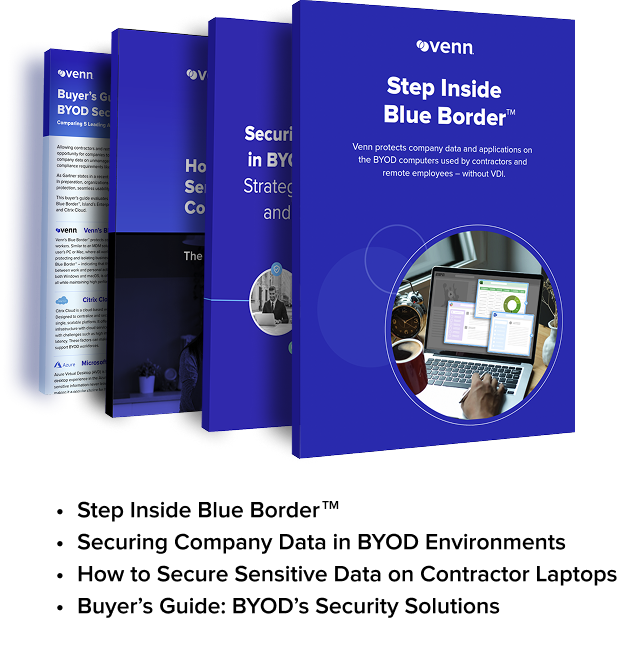
Secure Company Data on BYOD Laptops
Unlock the 4 essential assets you need to secure company data on unmanaged laptops – without VDI.
In this article:
- What Is Call Center Compliance Software
- Regulations Call Center Compliance Software Helps Enforce
- What Non-Compliance Costs a Call Center: Fines, Class Actions, and Lost Contracts
- Core Features of Call Center Compliance Software
- How Compliance Monitoring Differs From Quality Assurance and Workforce Management Tools
- Compliance Gaps When Agents Work Remotely, Offshore, or Through BPOs
- What AI Voice Agents and Real-Time Assist Change About Compliance
- Best Practices for Deploying Call Center Compliance Software
- The Bottom Line
What Is Call Center Compliance Software
Call center compliance software is a layer that sits alongside a dialer, CRM, and recording system to automatically enforce the regulations that govern outbound and inbound calling. Instead of relying on agents to remember calling windows, consent status, or recording rules on every call, the software checks each interaction against current regulatory requirements in real time and flags or blocks the ones that would create risk.
For most contact centers, that means matching numbers against do-not-call lists before a call connects, applying the right consent and recording rules based on the customer’s location, and generating the audit trail regulators and plaintiffs’ attorneys will eventually ask to see. It doesn’t replace legal judgment — it operationalizes it, so the same rules apply consistently across every campaign and every agent, whether they’re in-house, remote, or working through an outsourced partner.
Regulations Call Center Compliance Software Helps Enforce
Compliance software earns its budget line by tracking a stack of overlapping federal and state rules that change often enough to catch unprepared teams off guard.
TCPA Consent Rules and the FCC Revocation Requirements Now Delayed to 2027
The Telephone Consumer Protection Act (TCPA) governs autodialed calls, prerecorded messages, and texts, and it requires prior express consent before a business can contact a consumer. Two recent FCC actions matter here. The FCC’s proposed “one-to-one consent” rule, which would have required a separate consent record for each individual marketer, was vacated by the Eleventh Circuit Court of Appeals, so it never took effect.
Separately, the FCC’s “revocation-all” rule, which would treat an opt-out from one type of call as an opt-out from all future calls from that business, has been delayed a second time, now to January 31, 2027, giving companies more runway to build cross-channel revocation tracking before it’s mandatory.
FTC Telemarketing Sales Rule: Calling Hours, Abandoned Calls, and Five-Year Recordkeeping
The FTC’s Telemarketing Sales Rule (TSR) sets the operational guardrails most compliance software is built around. Calls can only be placed between 8 a.m. and 9 p.m. in the called party’s local time zone, and predictive dialers can’t abandon more than 3% of answered calls in a campaign over a rolling 30-day period. The FTC also extended its recordkeeping requirement from two years to five, covering who was called, when, by whom, and with what result — documentation that’s only realistic to maintain automatically at scale.
National and State Do Not Call Registry Scrubbing
Every calling list has to be checked against the National DNC Registry at least once every 31 days, plus an internal, company-specific suppression list that has to be honored for at least five years. Several considerations layer on top of the national registry:
- Eleven states maintain their own DNC registries that require separate scrubbing, including Florida, Texas, and Pennsylvania.
- Opt-out and internal DNC requests must be processed within 30 days of receipt.
- Scrub timing matters for fast-moving campaigns — a list pulled the day before a 31-day scrub window closes can still be technically compliant but practically stale.
One-Party and Two-Party Call Recording Consent Laws by State
Most states allow call recording with the consent of just one party — typically the agent’s employer. Roughly a dozen states, including California, Florida, Illinois, Massachusetts, Pennsylvania, and Washington, require all-party consent, meaning the customer has to be notified (usually through a disclosure at the start of the call) before recording begins. A few other states have mixed or unsettled rules, which is why compliance software typically routes recording-consent logic by the customer’s verified location rather than one company-wide policy.
PCI DSS 4.0 Requirements for Card Payments Taken Over the Phone
For call centers that take card payments by phone, PCI DSS 4.0.1 changed what counts as sufficient protection. Pausing and resuming call recording while an agent collects card details used to be treated as adequate; current PCI guidance on telephone-based payments treats that approach as no longer reliable on its own, since screen captures, CRM logs, and signaling data can still expose cardholder data even when the recording itself is paused. DTMF masking — letting the customer enter card details by keypad so the agent never hears or sees them — is now the more defensible approach for keeping the call center environment out of PCI scope.
HIPAA, GDPR, and US State Privacy Laws Applied to Call and Screen Data
Any call center handling health information is subject to HIPAA compliance requirements for recordings, transcripts, and screen captures that reference protected health information, so encryption, access controls, and audit logging apply the same way they would to a medical record. Calls involving EU residents can trigger GDPR obligations around consent and data minimization, and a growing list of US state privacy laws extend access and deletion rights to call recordings — not just the account records most companies think to cover first.
What Non-Compliance Costs a Call Center: Fines, Class Actions, and Lost Contracts
The financial exposure here is unusually asymmetric for how routine the underlying mistake often is — a missed DNC scrub, an unrecorded disclosure, a stale consent record.
- TCPA violations carry statutory damages of $500 per call or text, rising to $1,500 for willful violations, with no cap and no requirement to prove actual harm — and every call is a separate violation, so damages multiply fast across a class.
- The FCC’s largest robocall fine to date, $299,997,000 against an auto-warranty scam operation that placed billions of unauthorized calls, shows how far penalties can scale when violations are systemic rather than isolated.
- The FTC’s civil penalty ceiling for a single Telemarketing Sales Rule violation currently sits at $53,088, adjusted annually for inflation.
- Beyond direct penalties, compliance failures show up in lost business: enterprise clients and healthcare or financial services partners increasingly require compliance attestations before signing with a call center or BPO, and a failed audit can end a contract as fast as a fine can.
Core Features of Call Center Compliance Software
Most platforms in this category converge on the same core capability set, even though vendors package and price them differently.
Consent Capture, Revocation Tracking, and Automated DNC Scrubbing
The software records how and when consent was obtained, tracks revocations across every channel that dials or texts a number, and automatically scrubs calling lists against national and state DNC registries before a campaign launches. In practice, that means automatically checking and blocking numbers on federal, state, or internal DNC registries before the dialer connects, and managing consent for recordings alongside opt-out requests across every channel.
The harder problem is keeping that record consistent once a number touches more than one system. A consumer who opts out through an SMS reply, a live agent, or an IVR prompt needs that revocation to reach the dialer, the CRM, and any partner platform dialing the same list — not just the system that logged it first. Compliance software handles this by centralizing revocation status and pushing it downstream automatically, on the same cadence the rules require: national list scrubs at least every 31 days, opt-out requests processed within 30 days, and internal suppression records held for a minimum of five years.
Calling Window, Time Zone, and State Holiday Controls
Rather than relying on a single company-wide calling schedule, the system maps each number to its local time zone and blocks calls outside the legally permitted window, including state-specific restrictions around holidays and Sundays that some states still enforce. The result is that outbound calls are restricted to legally permissible local calling hours, enforced number by number rather than campaign by campaign.
This matters more than it sounds because a single list rarely sits in one time zone. Ported numbers, mobile area codes that no longer match the subscriber’s actual location, and multi-state campaigns all make a blanket 8 a.m.–9 p.m. rule unreliable if it’s applied at the campaign level instead of the number level. Compliance software resolves this by geocoding each record before it’s dialed and applying the narrowest applicable rule — federal, state, or local — so a list that spans a dozen states doesn’t get throttled to its most restrictive window or, worse, left exposed in its least restrictive one.
Call Recording With Automatic Pause and Resume for Card and Health Data
For calls that touch payment or health data, the system pauses recording (or masks the relevant audio and screen data) automatically when sensitive fields are on screen, then resumes once that portion of the call is complete. Recording controls are only half of it: the same layer masks or removes sensitive personal information such as credit card details (PCI DSS) or health data (HIPAA) wherever it appears, including transcripts and screen captures.
Pause-and-resume logging is what turns this from a manual habit into something auditable — every trigger, timestamp, and resume event is recorded so a business can prove the sensitive portion of a call was never captured, not just assert it. That said, pause-and-resume alone is increasingly treated as a partial control rather than a complete one, since screen captures and CRM logs can still retain cardholder data even while the recording itself is paused. Leading platforms now pair it with DTMF masking for card entry and field-level redaction for health data, so the protection doesn’t depend on the recording layer catching everything.
Real-Time Agent Guidance and Automated Scoring of Every Interaction
Instead of sampling a small percentage of calls for manual review, compliance software scores every interaction against required disclosures and prohibited language, and can prompt agents in real time when a required statement hasn’t been made. In practice, the platform records, transcribes, and analyzes 100% of interactions for compliance risks, which is the level of coverage a manual QA program can never reach.
The real-time layer is what separates this from after-the-fact QA: if an agent skips a required recording disclosure or uses language a script prohibits, the system can surface a prompt mid-call instead of flagging it in a review three days later. Scored results roll up into trend data — which agents, scripts, or campaigns generate the most compliance flags — so legal and operations teams can intervene before a pattern becomes a pattern of violations a regulator or plaintiff’s attorney can point to.
Audit Trails, Retention Policies, and Evidence Export for Regulators
Every action — consent captured, list scrubbed, call recorded, disclosure made — is logged with a timestamp and tied to retention rules that match each regulation’s minimum, with export formats built for regulator or litigation requests rather than internal reporting alone. Those automated logs are what turn a compliance claim into evidence someone outside the business will accept.
Retention schedules aren’t uniform across regulations, so the audit trail has to track which clock applies to which record: five years for TSR-related call records, longer for HIPAA-covered documentation, and different windows again under state privacy laws. Export formats matter just as much as retention — a log that’s readable internally but can’t be produced as a clean, timestamped record for an FTC inquiry or a TCPA class action doesn’t actually function as evidence when it’s needed most.
Secure Company Data on BYOD Laptops
Unlock the 4 essential assets you need to secure company data on unmanaged laptops – without VDI.
How Compliance Monitoring Differs From Quality Assurance and Workforce Management Tools
It’s easy to conflate compliance monitoring with the QA and workforce management (WFM) tools most call centers already run, but they solve different problems. QA software scores a sample of calls for tone and customer experience — built to improve agent performance, not prove regulatory adherence.
WFM handles staffing and scheduling, with no visibility into consent status or recording rules at all. Compliance monitoring is the only one of the three built to review every call rather than a sample and produce evidence a regulator would accept — which is why most contact centers eventually run it as its own system rather than a QA add-on.
Compliance Gaps When Agents Work Remotely, Offshore, or Through BPOs
Contact center compliance software is only as strong as the environment agents are actually working in, and that environment increasingly includes personal laptops, offshore teams, and outsourced BPO partners the business doesn’t own or fully control.
Risks Created by Unmanaged Personal Laptops in Agent Home Offices
When agents work from personal devices, which is common across remote, offshore, and outsourced teams, call recordings, screen data, and customer PII pass through a laptop the business has no visibility into and can’t fully secure with traditional device management. BYOD security best practices call for controls that protect the work itself without requiring the company to own or manage the whole machine, which is the more realistic model for contractor and BPO populations that will never accept a company-issued laptop or full device management.
Blocking Screen Capture, Copy/Paste, Printing, and Downloads of Customer Data
Compliance rules around card and health data don’t stop at the recording — they extend to whether an agent can screenshot a customer’s account screen, paste a card number into a chat window, or print a call transcript. Endpoint DLP controls that block copy/paste, downloads, printing, and screen capture around work applications close that gap without requiring invasive monitoring of the rest of the device.
Isolating Work Applications From Personal Use on a Shared Device
The most reliable way to enforce all of the above on a device the company doesn’t own is to separate business activity from personal activity on that same machine. Blue Border™, Venn’s secure workspace for remote employees, contractors, and BPO agents, creates a company-controlled secure enclave on any PC or Mac – where company data, applications, and AI workflows are protected. Everything outside the enclave stays private and untouched. For contact center and call center workforces specifically, that means consistent compliance controls across in-house, remote, and outsourced agents without buying, shipping, or managing a fleet of laptops.
What AI Voice Agents and Real-Time Assist Change About Compliance
AI voice agents and real-time assist tools are showing up across outbound and inbound call center operations fast enough that regulators are still catching up, which puts extra weight on compliance software to keep pace.
Disclosure Rules for Synthetic and AI-Generated Voices on Outbound Calls
The FCC has confirmed that AI-generated voices qualify as an “artificial or prerecorded voice” under the TCPA, meaning outbound calls using a synthetic voice need the same prior express written consent as a traditional prerecorded message. States are layering additional disclosure requirements on top: Texas requires AI voice use to be disclosed within the first 30 seconds of a call, and California requires a verbal AI disclosure on automated calls, with Colorado and other states adding their own transparency rules. Compliance software increasingly needs to track which calls used a synthetic voice and confirm the required disclosure was actually delivered, not just scripted.
Redacting PII From Transcripts Used for Analytics and Model Training
Call transcripts are valuable training data for the AI tools now embedded in most contact center stacks, but feeding raw transcripts into an analytics or model-training pipeline can carry card numbers, health details, and other PII along with them. Redacting that data before it leaves the compliance boundary — rather than trusting a downstream tool to filter it — keeps AI initiatives from quietly creating a second compliance problem alongside the first. This is the same data redaction and security requirement that applies to live calls, applied to everything the transcript pipeline touches downstream.
Best Practices for Deploying Call Center Compliance Software
A compliance platform only delivers on its promise if it’s deployed with the right process wrapped around it:
- Map each regulation to the specific campaigns and call flows it governs. A blanket policy misses the fact that TCPA, PCI, and HIPAA requirements apply to different calls for different reasons.
- Automate consent and revocation handling across every system that dials. A revocation logged in the dialer but not the CRM (or a partner’s system) is a compliance gap waiting to surface in a lawsuit.
- Separate compliance scorecards from quality scorecards. Blending the two makes it harder to see regulatory risk clearly and can pressure agents to prioritize customer satisfaction over required disclosures.
- Run calibration sessions with legal, QA, and operations together. Compliance rules get interpreted differently by each team unless they’re calibrating against the same recorded calls and the same standard.
- Enforce device and workspace controls before onboarding outsourced agents. Compliance software can flag a violation, but it can’t stop customer data from leaving an unmanaged device unless workspace-level controls are in place first.
- Retest controls and re-scrub lists after every regulatory change. The 2027 revocation-all delay and PCI DSS 4.0.1 updates are reminders that “compliant today” has a shelf life — controls need to be revalidated every time a rule shifts, not just when the software vendor pushes an update.
The Bottom Line
Call center compliance software closes the gap between what regulators require and what agents can reliably remember on every call, but the software is only one piece of it. TCPA, TSR, PCI DSS, and HIPAA rules keep shifting, non-compliance costs scale far faster than the mistakes that trigger it, and an increasing share of the workforce making these calls — remote employees, offshore teams, BPO agents — is working from devices the business doesn’t fully control.
Getting compliance right means pairing the software with the workspace controls, calibration process, and device standards to back it up, no matter where an agent is dialing from.

Any worker. Any laptop. Any AI workflow. Fully secured.
Schedule a demo to see how Blue Border™ secures company data and apps without shipping laptops, running VDI, or managing personal endpoints.